Women Migrants’ Rights and Welfare
This theme was highlighted in the Asia Pacific Mission for Migrants social media campaign last November. Through these campaigns, APMM strives to contribute to the 16 Days of Activism against Gender-Based Violence.
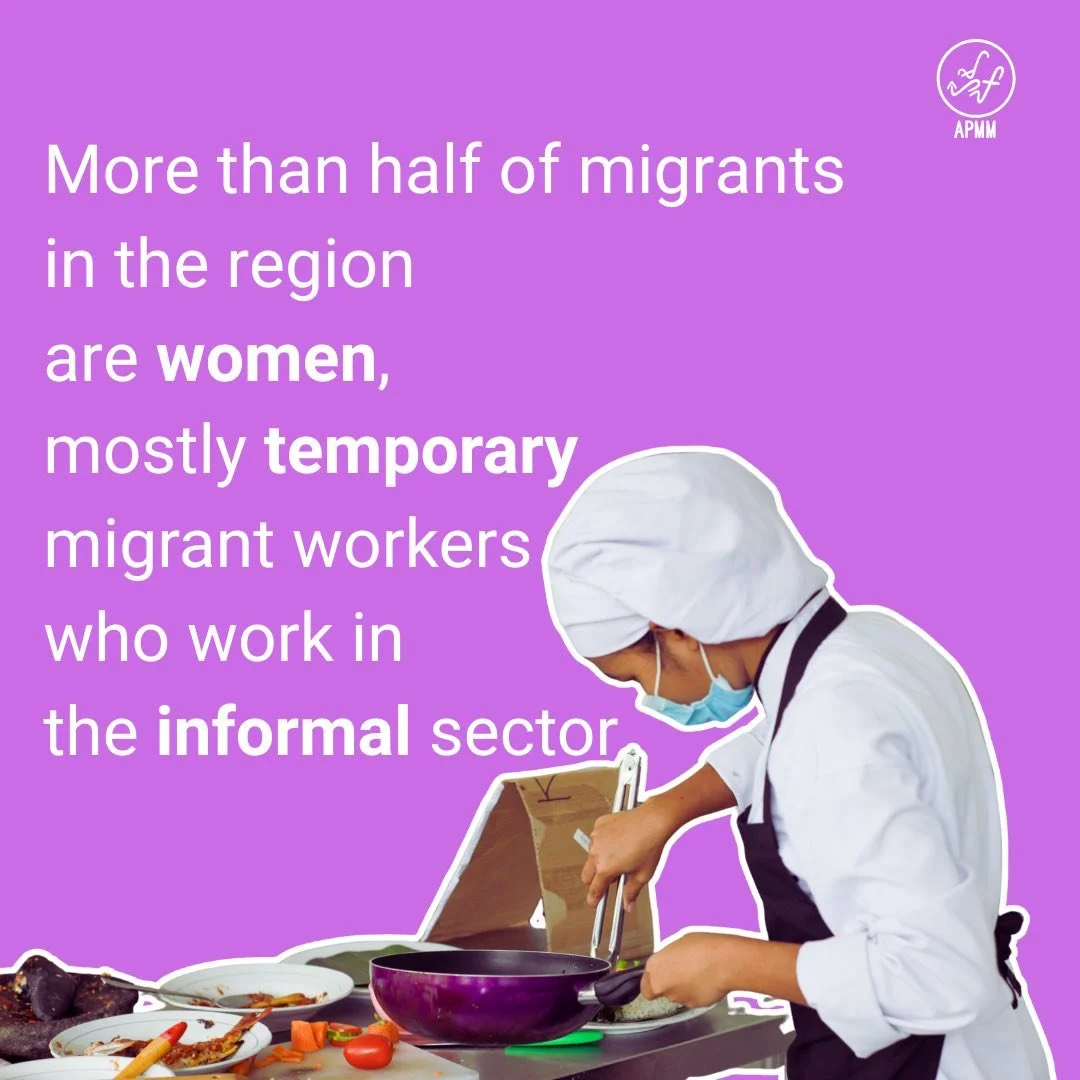
Women migrants composed more than half of migrants in the region, yet many of them are temporary migrant workers employed in informal, low-paid, and highly vulnerable sectors.
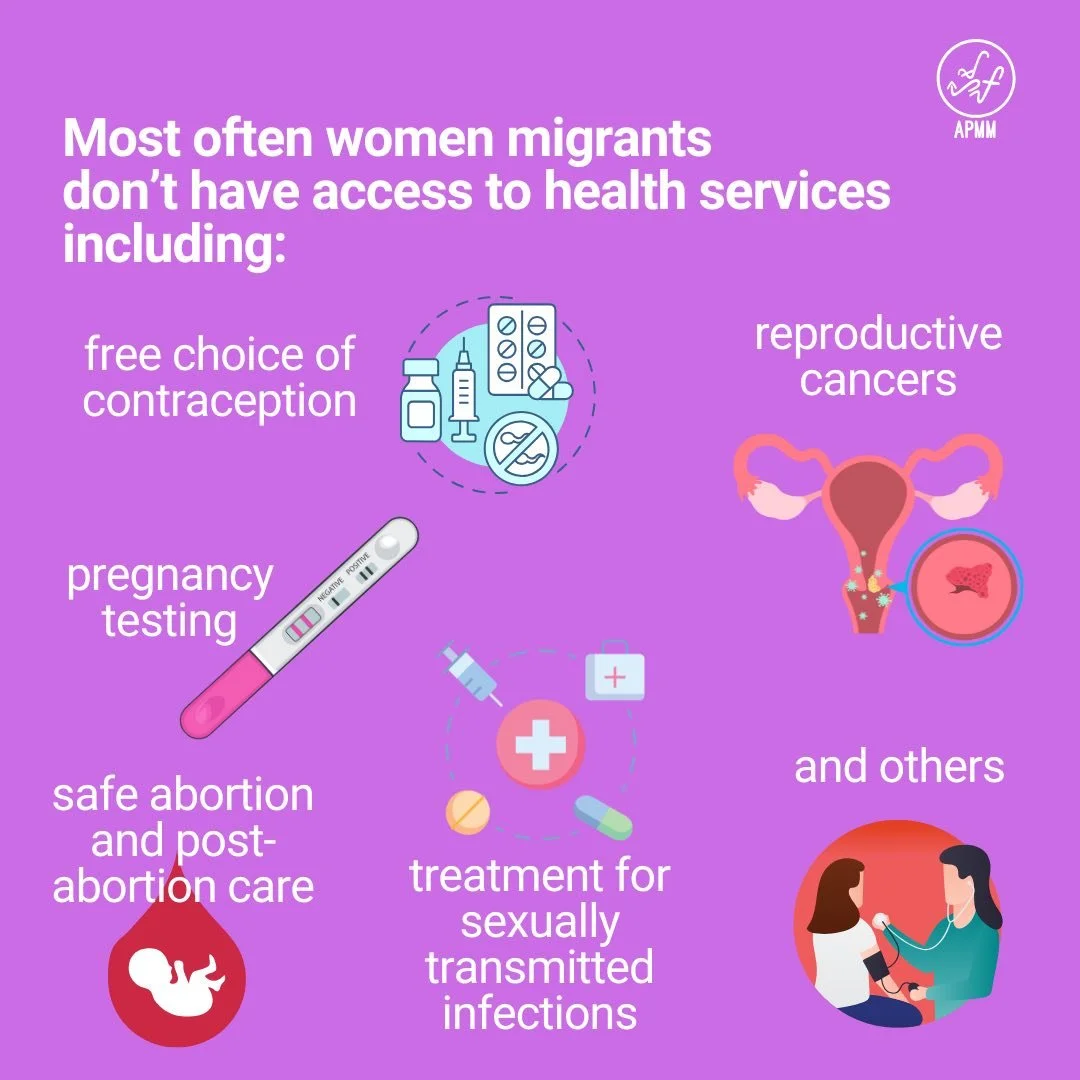
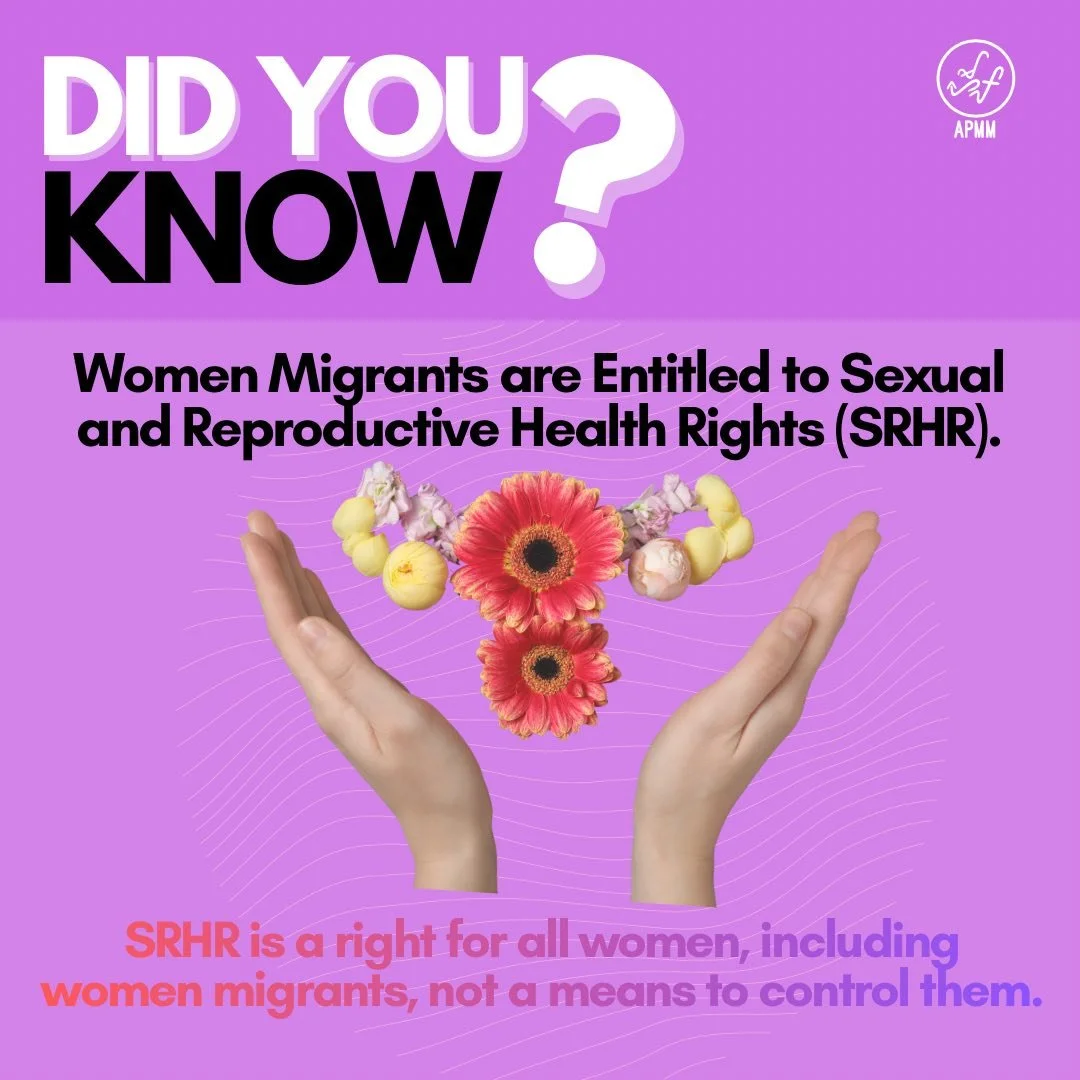
Despite being primary caregivers in many households, women migrants often have little to no access to essential health services — including contraception, pregnancy testing, safe abortion and post-abortion care, and treatment for sexually transmitted infections or reproductive cancers. Their right to be healthy “inside and out” remains far from reality.
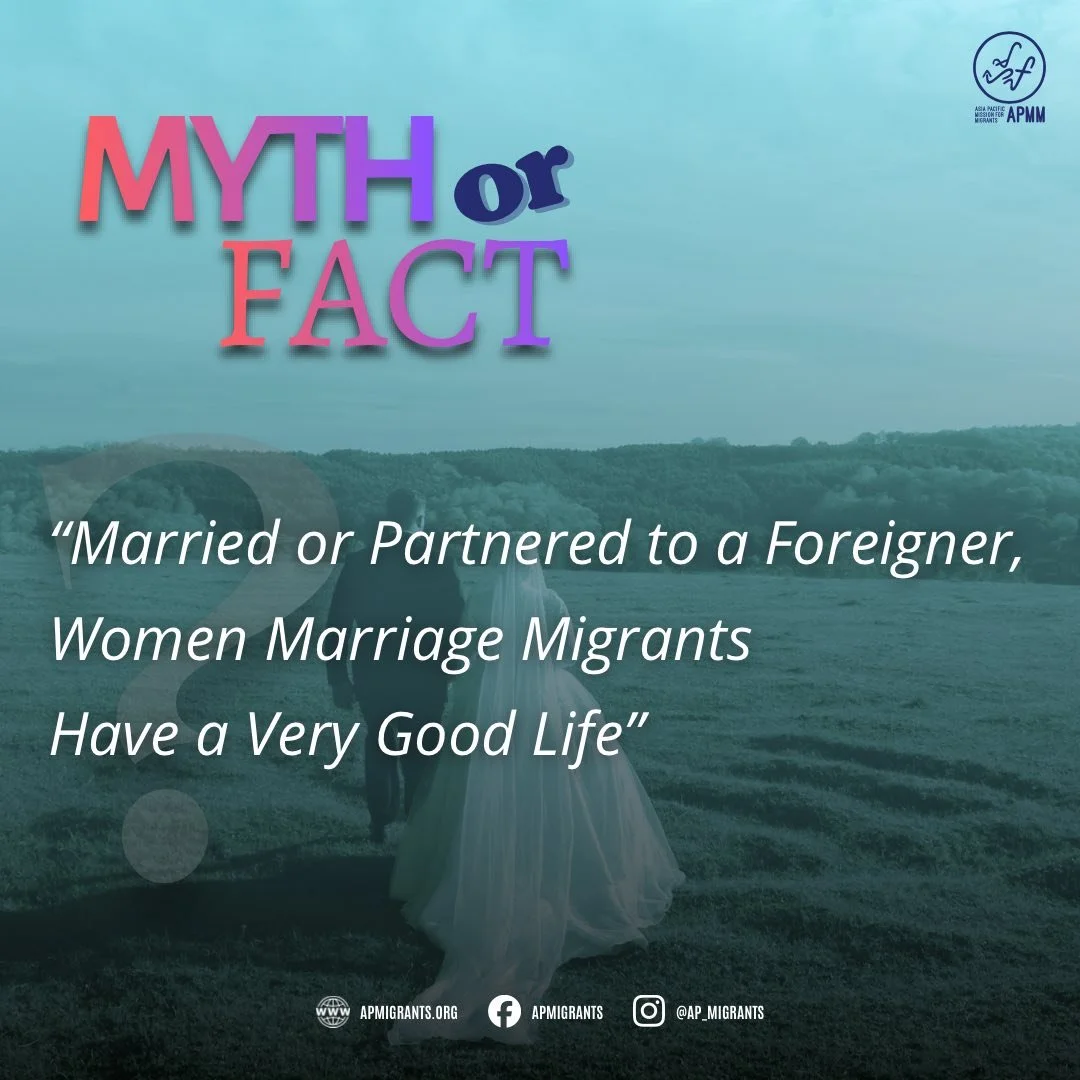
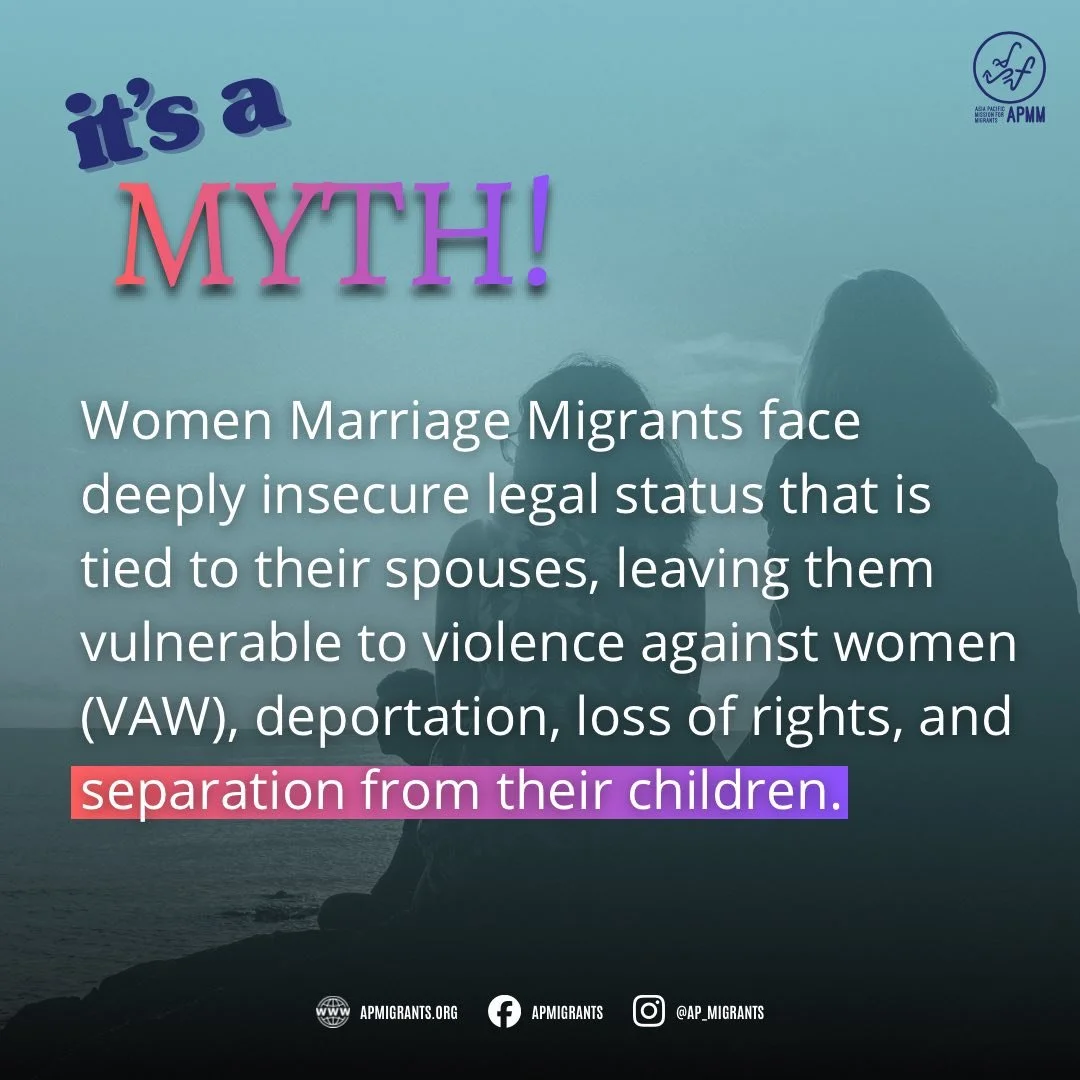
Married migrants who mostly are women also face systemic barriers. Their legal status in their partner’s country often depends entirely on their spouse, leaving them at risk of domestic violence, discrimination, deportation, and separation from their children.
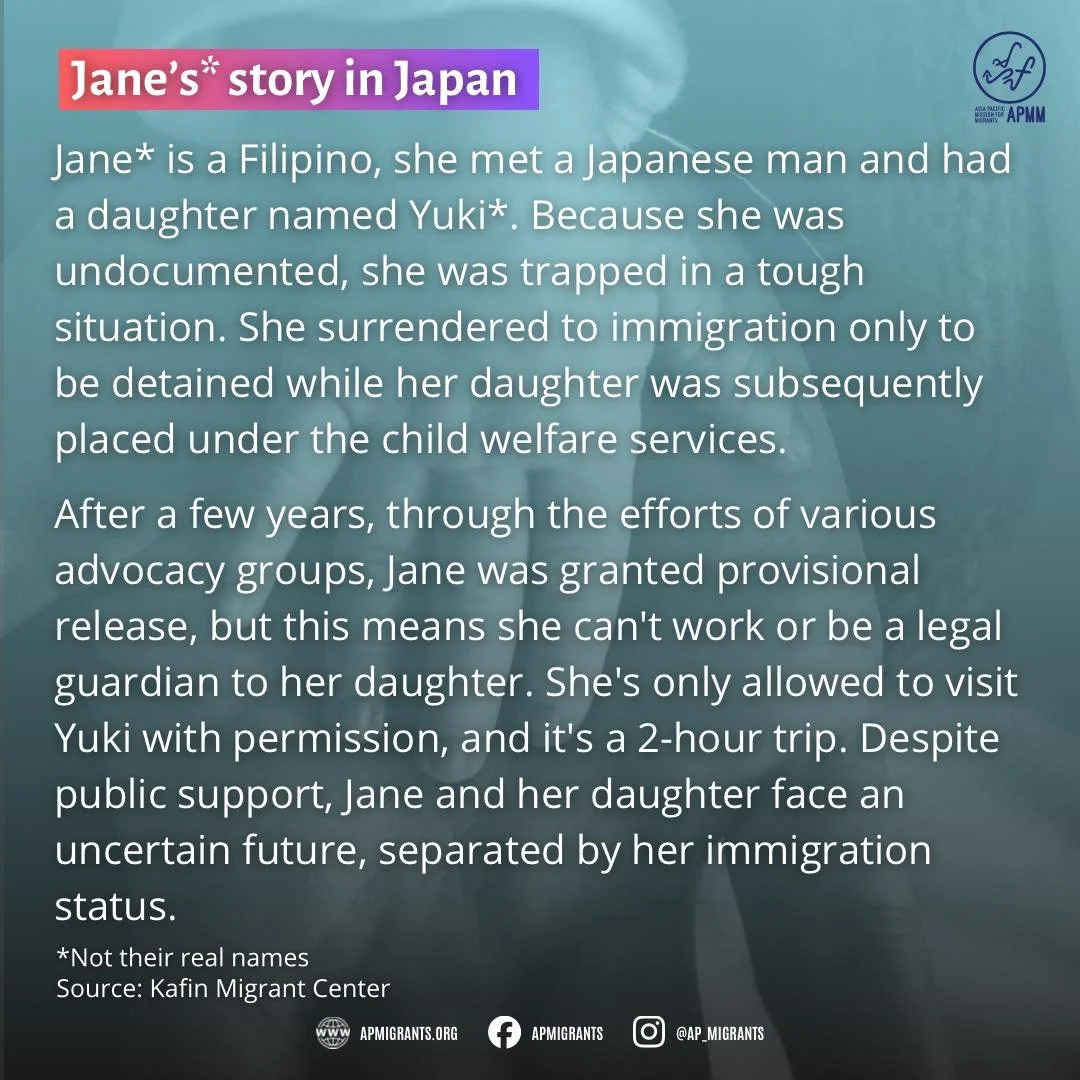
The highlighted story of Jane and her daughter Yuki (not their real name) in Japan, showed the real situation faced by migrant women and their struggle as migrant worker and mother, and more importantly showed the lack of legal protection, access to justice, and secure pathways for a mother to stay with her children.
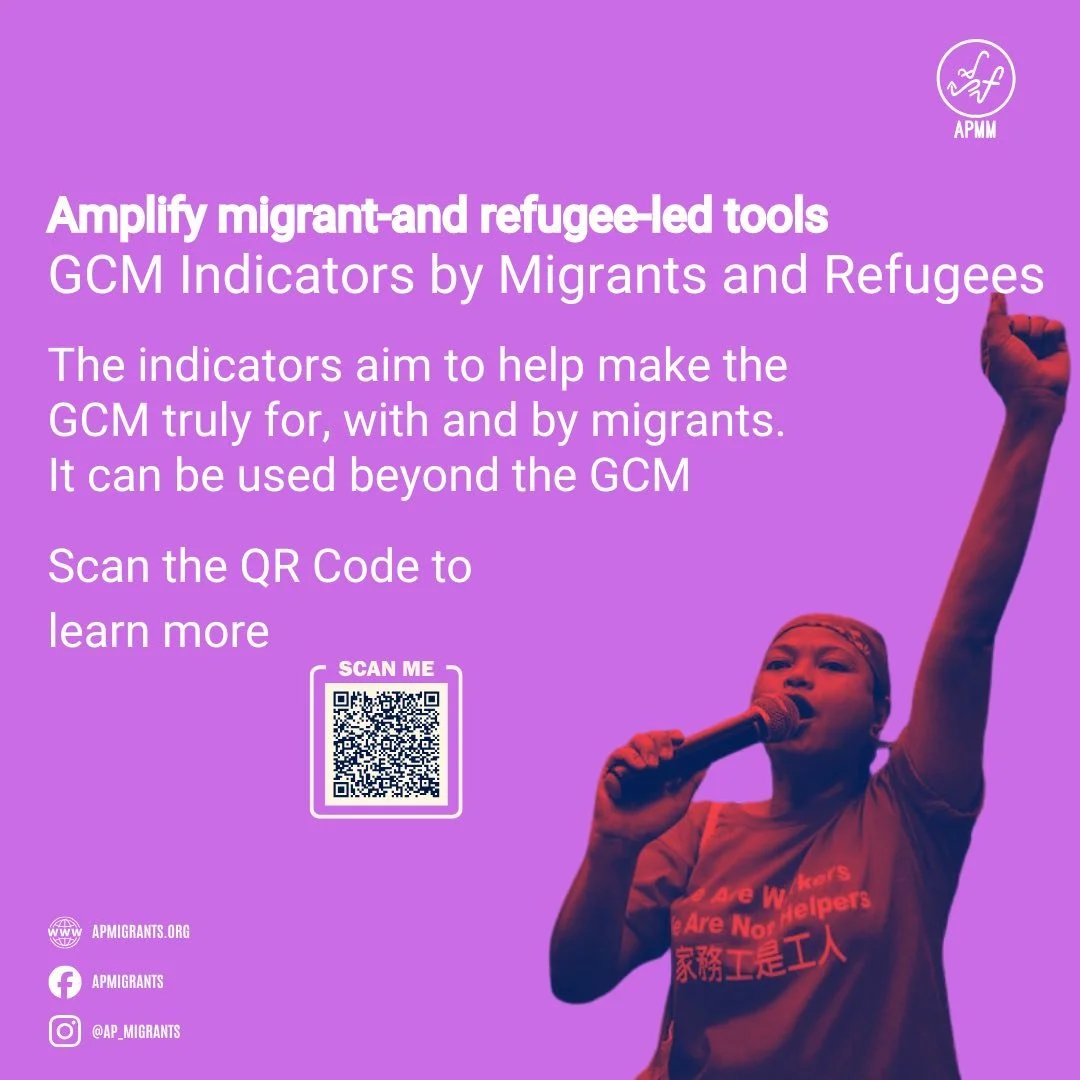
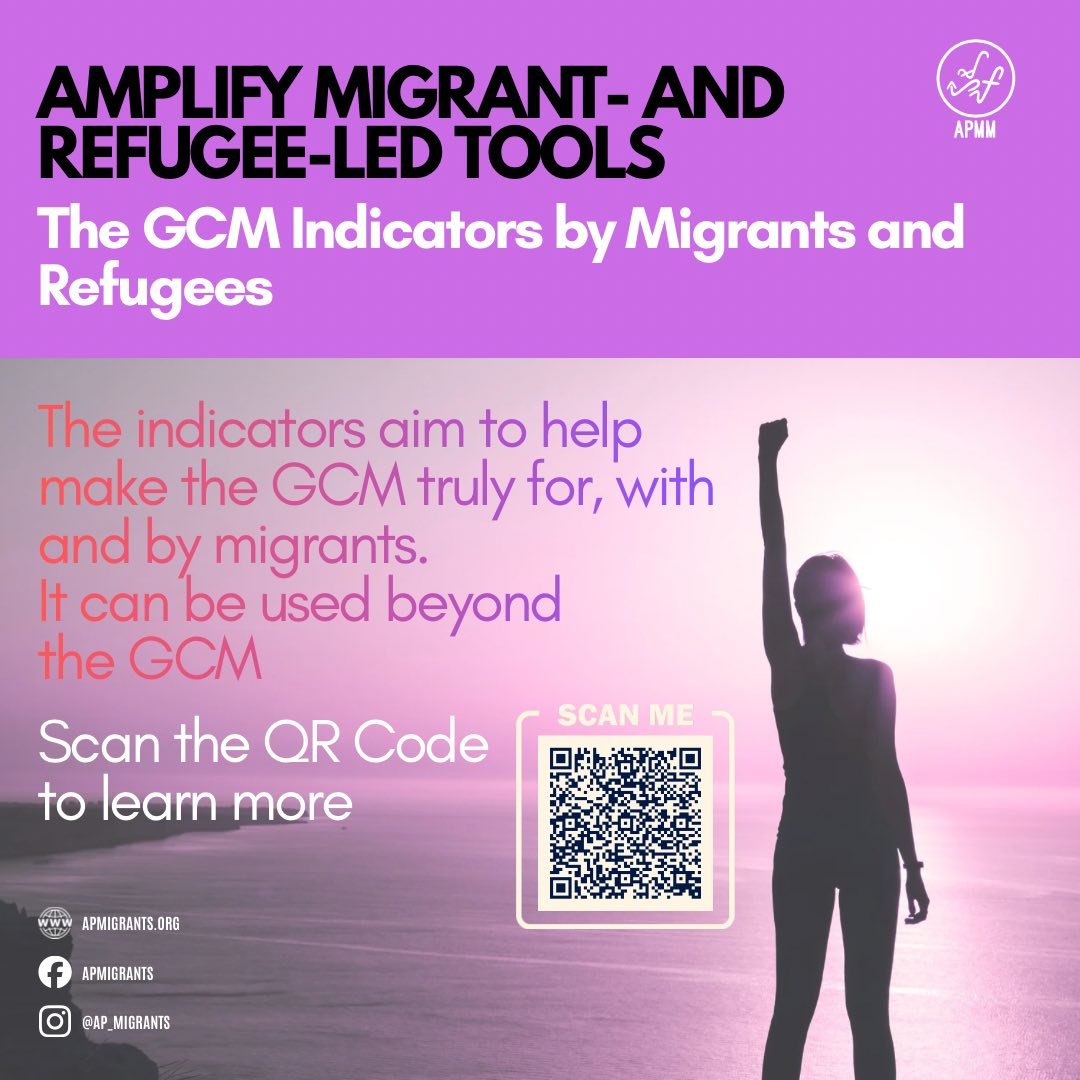
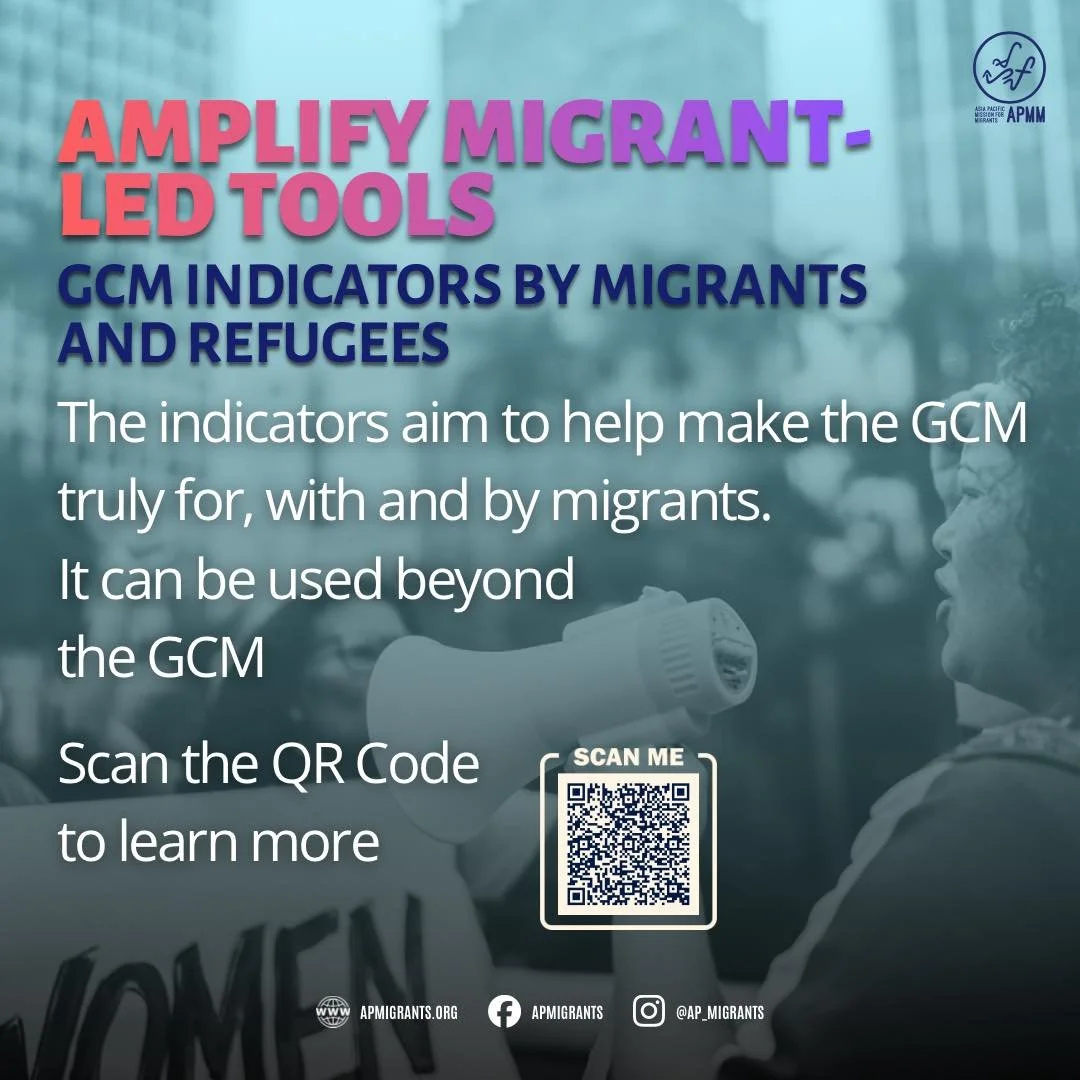
That is why APMM together with networks and grassroots organizations and communities developed the Global Compact for Migration (GCM) Indicators by Migrants and Refugees. Created through consultations and shaped by lived experiences, the Indicators call for stronger protections for women migrants’ rights and welfare.
Read more about the GCM Indicators by Migrants and Refugees here. Feel free to contact us at apmmadvocacy@gmail.com to get in touch.
Check out our social media postings below!