Drivers of (Forced) Migration
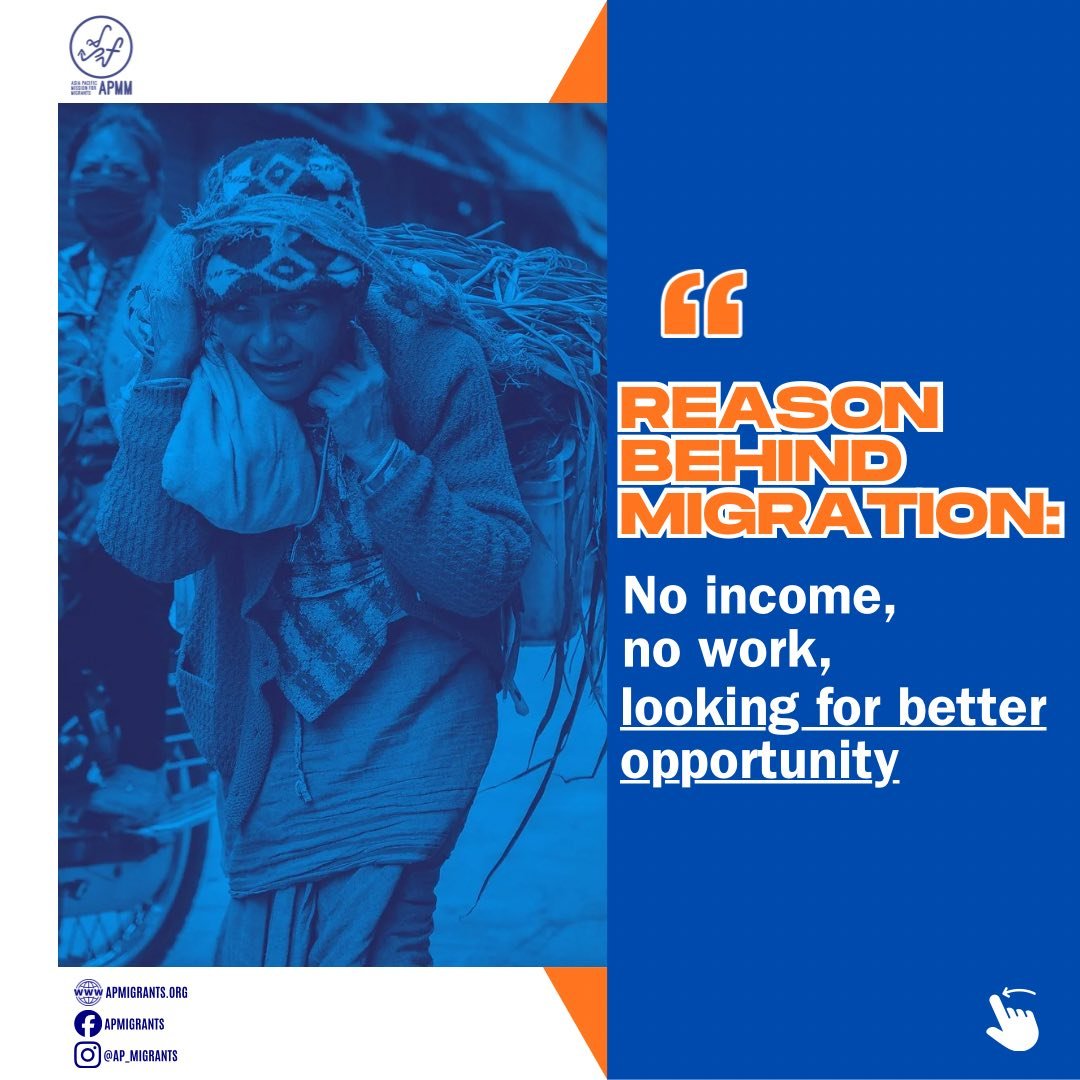
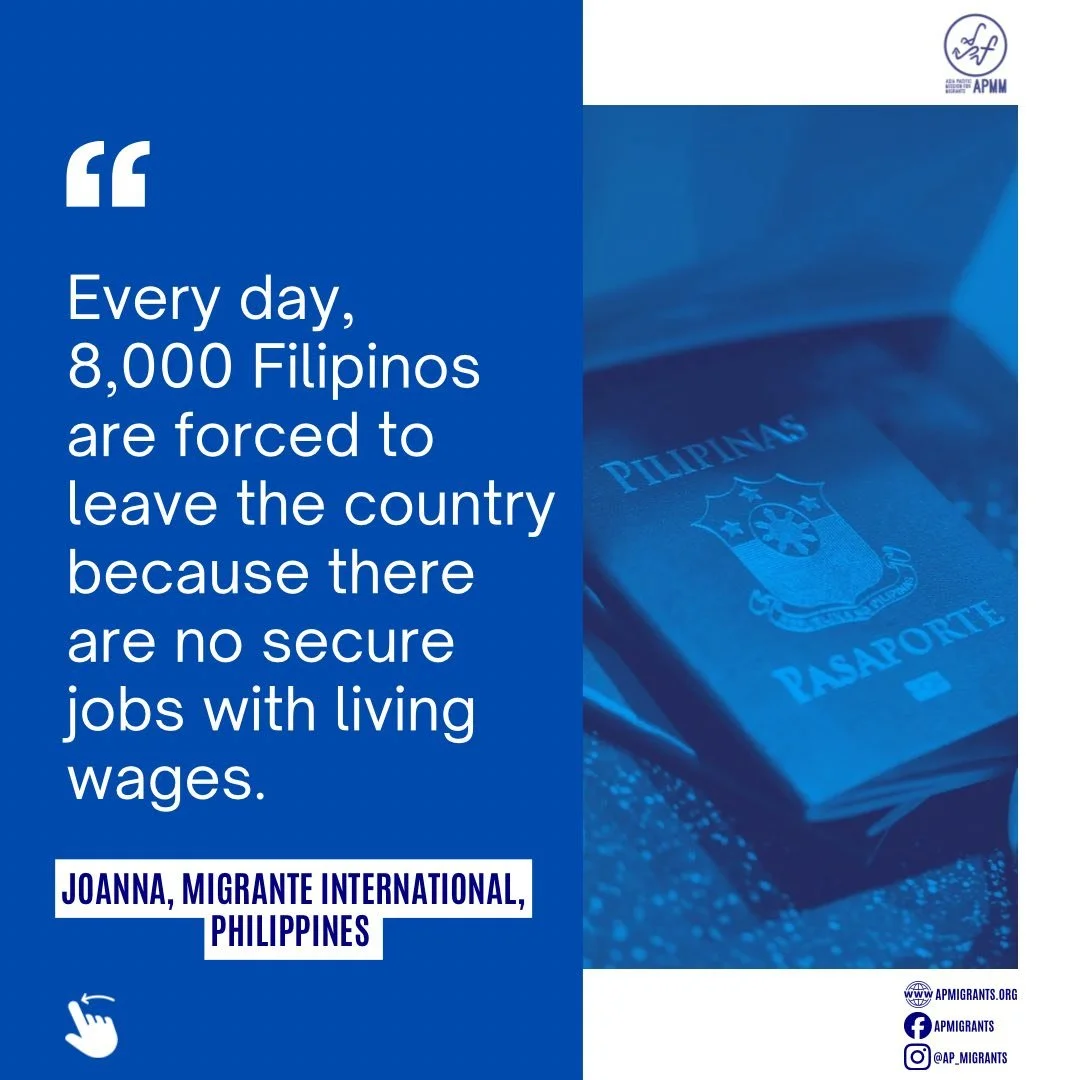
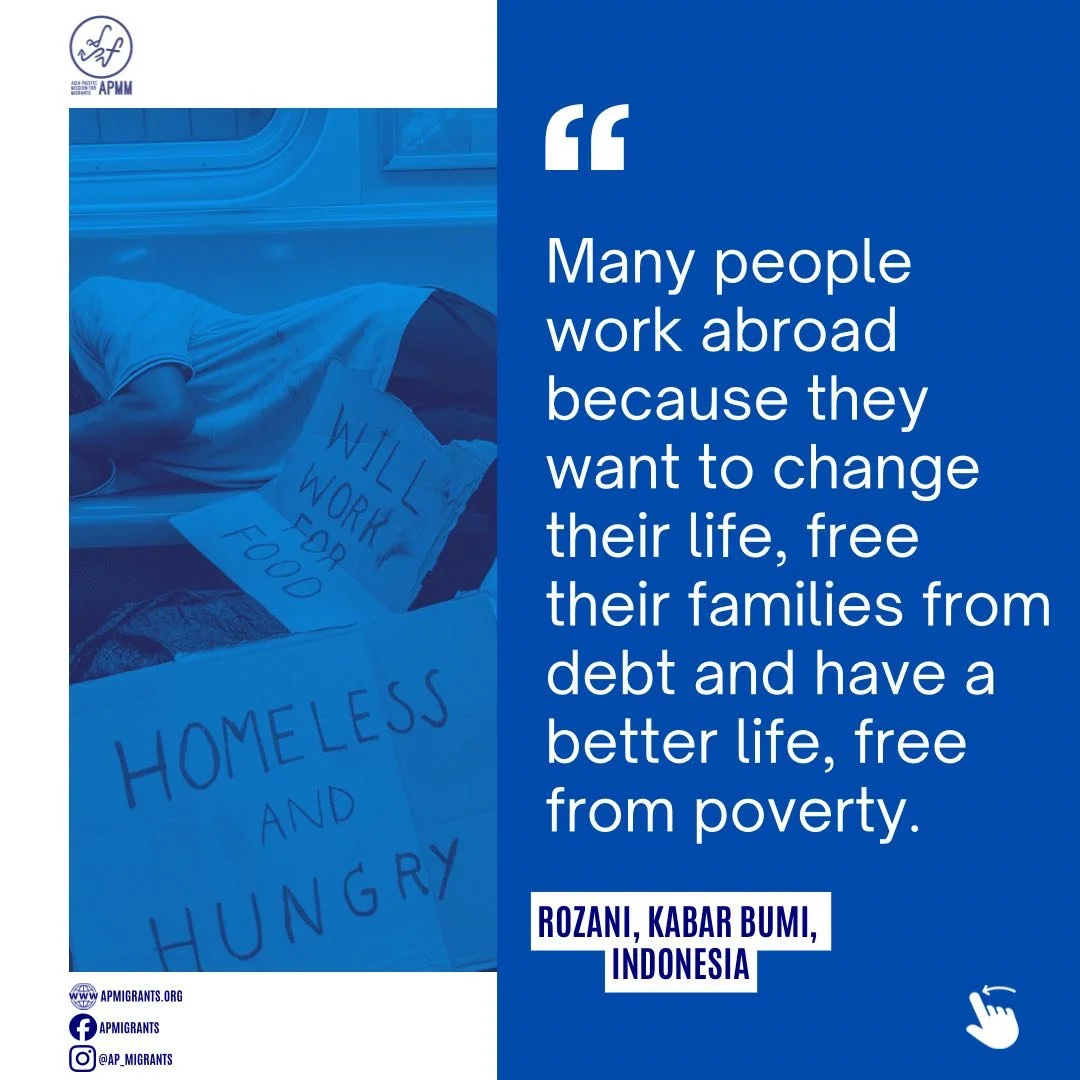
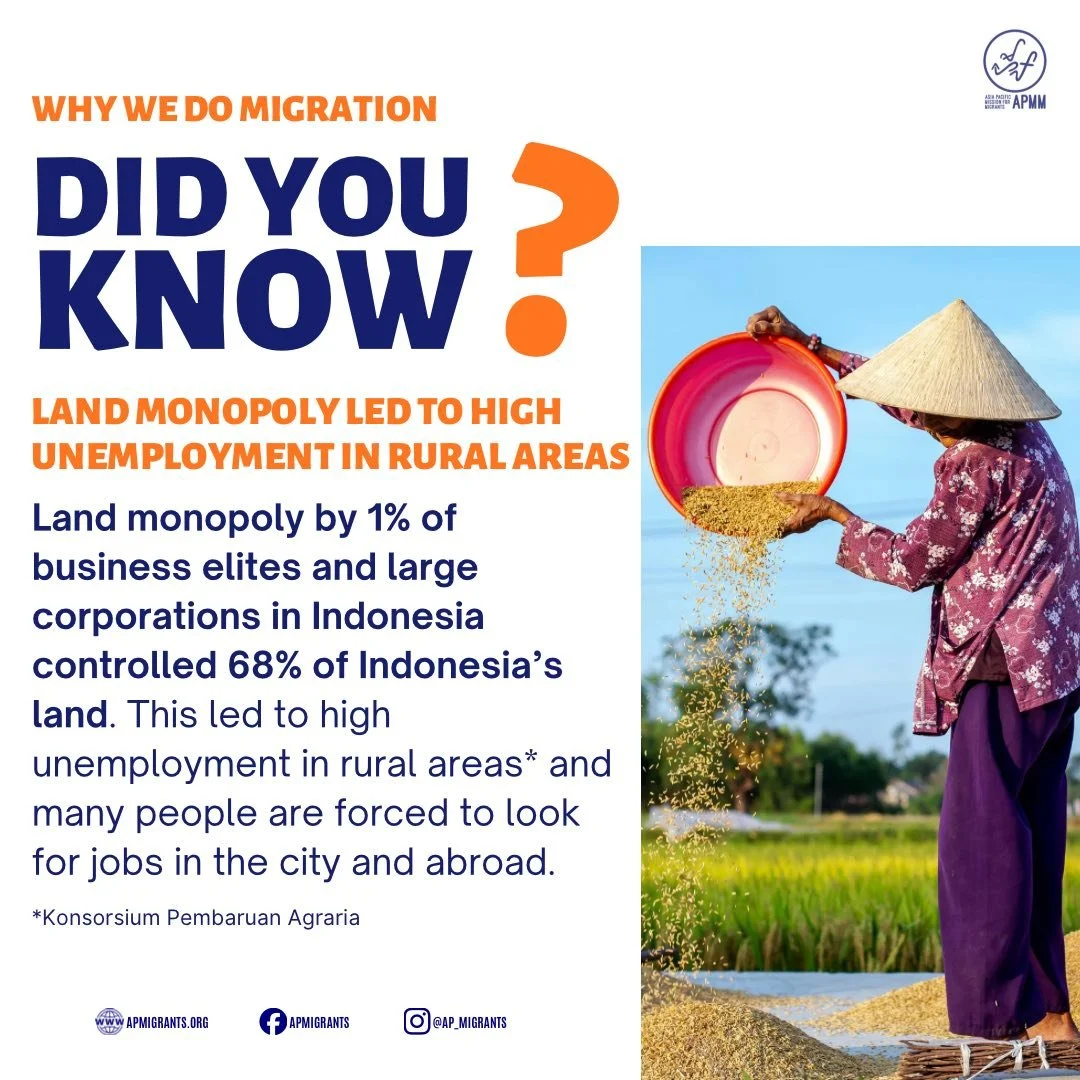
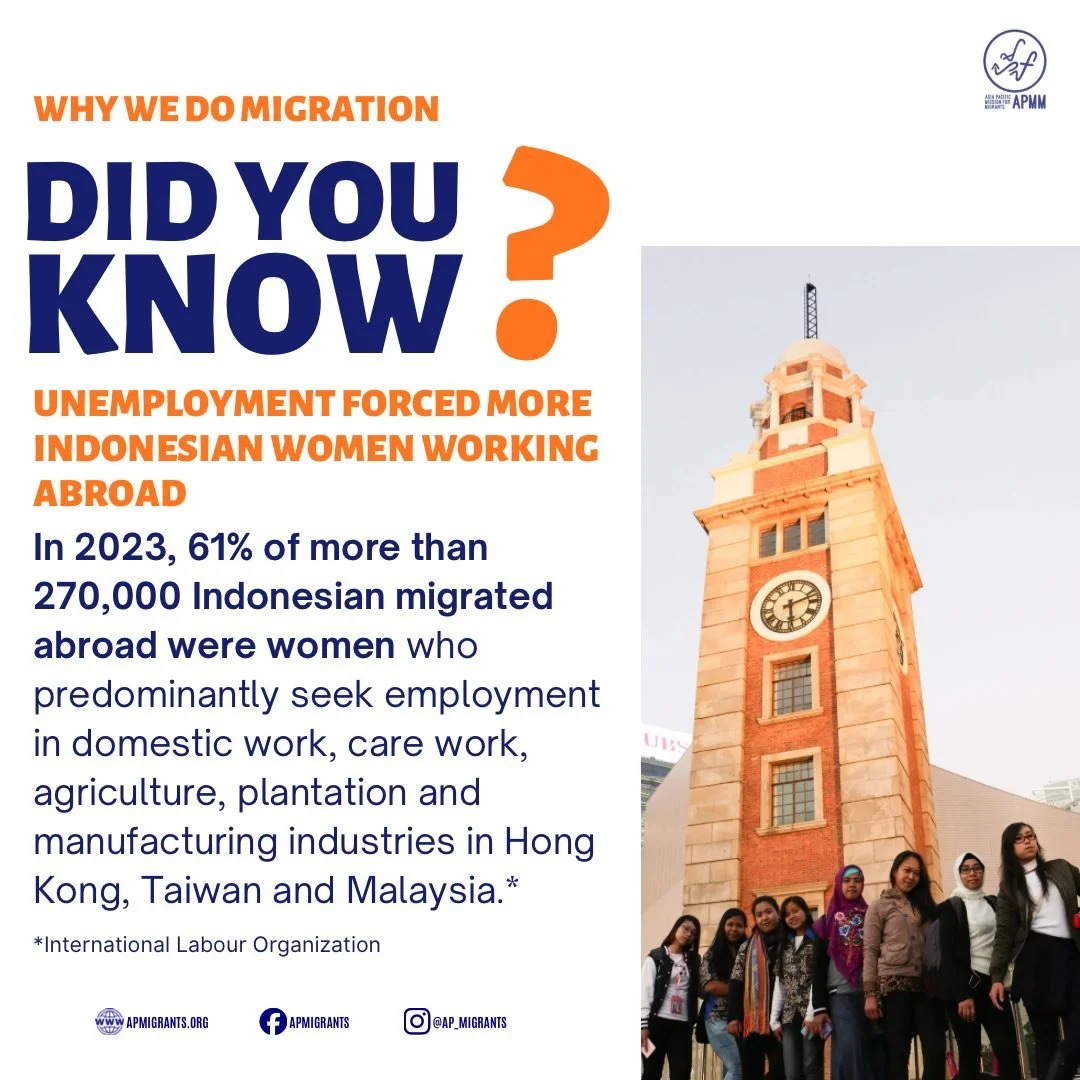
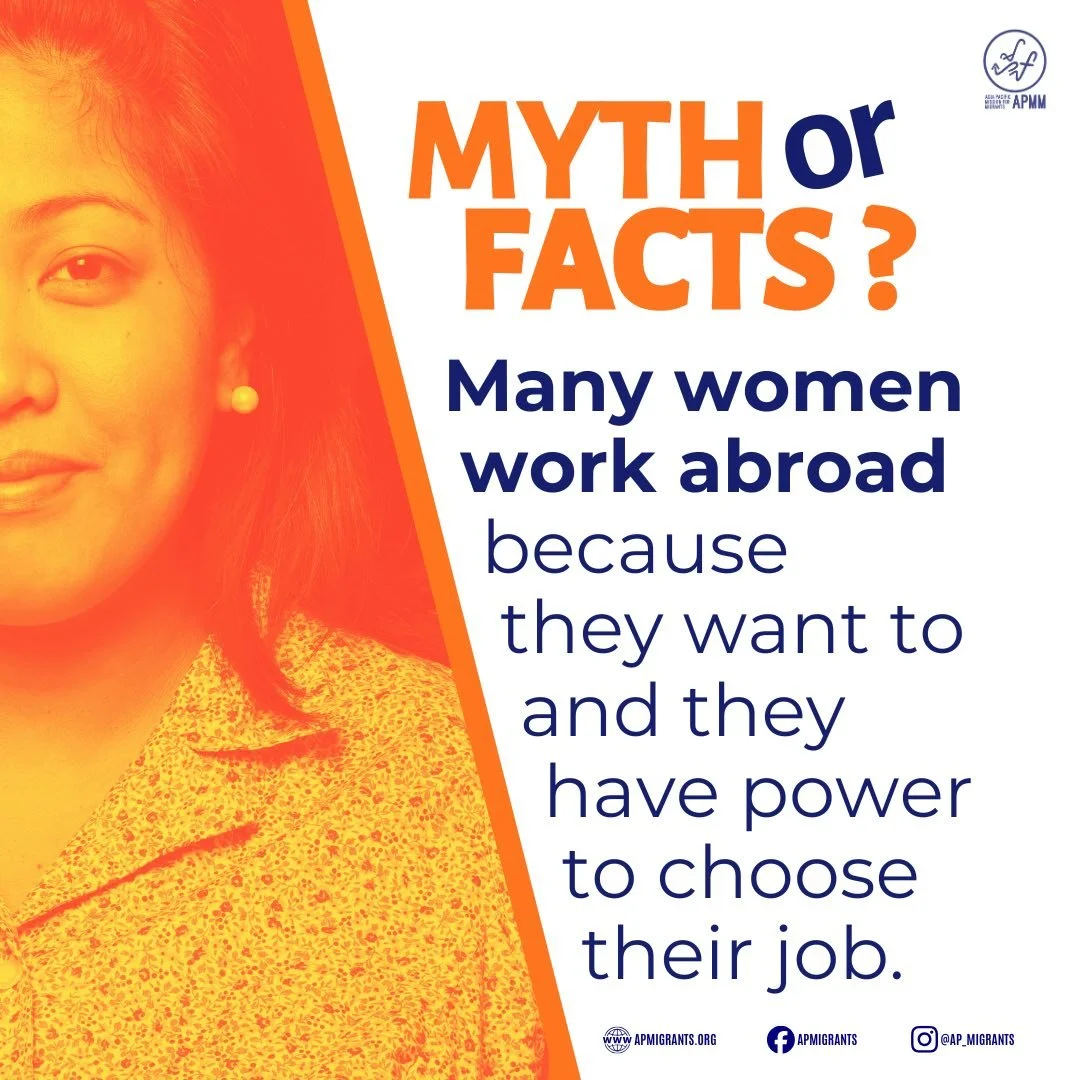
Last October, the Asia Pacific Mission for Migrants (APMM) focused its social media campaign on the Drivers of Migration. The campaign highlights that migration is often not a free choice but a consequence of structural inequalities, lack of decent work, and limited livelihood opportunities in migrants’ home countries. Unemployment and land monopoly force many, especially women, to seek work abroad, not out of preference, but because they have no other viable options.
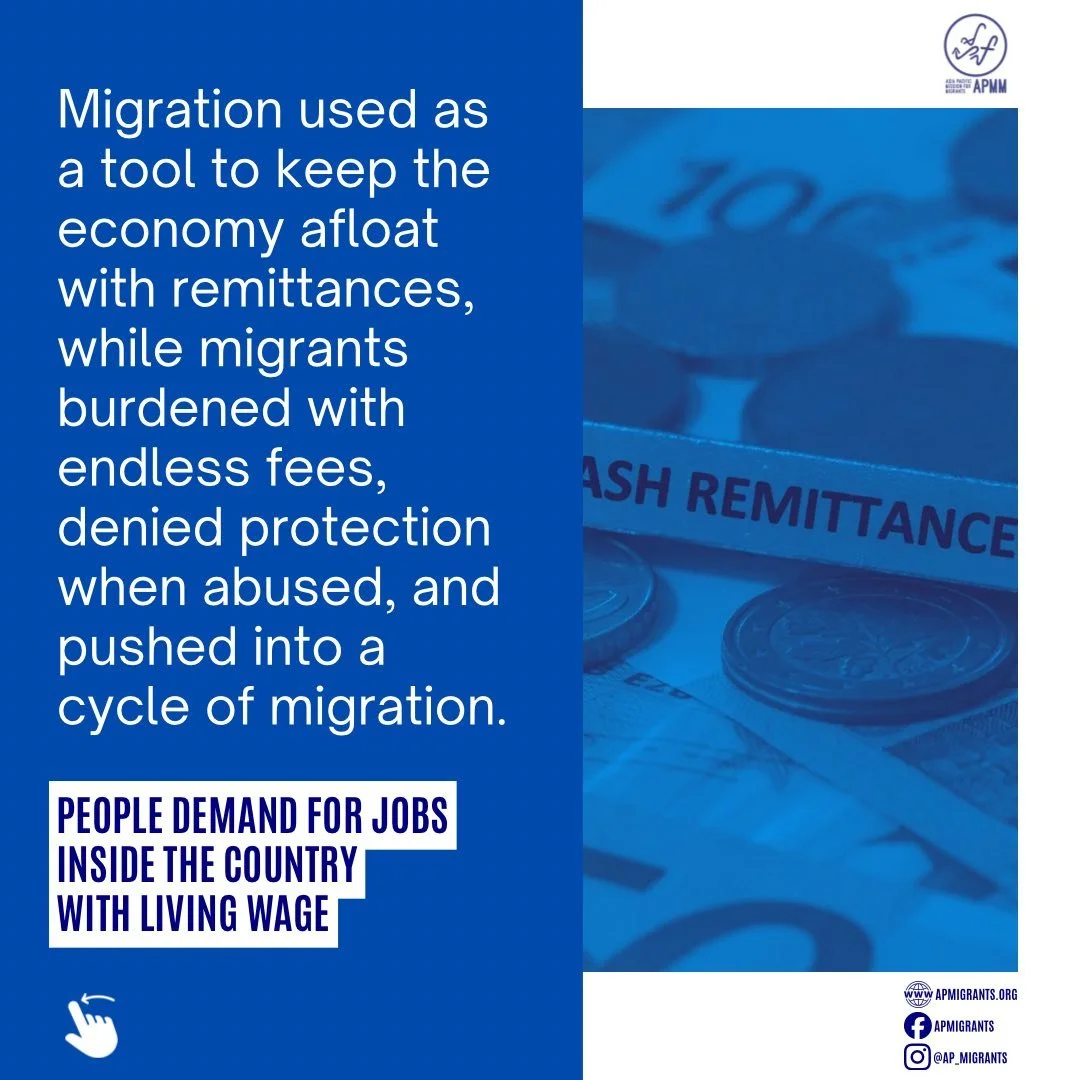
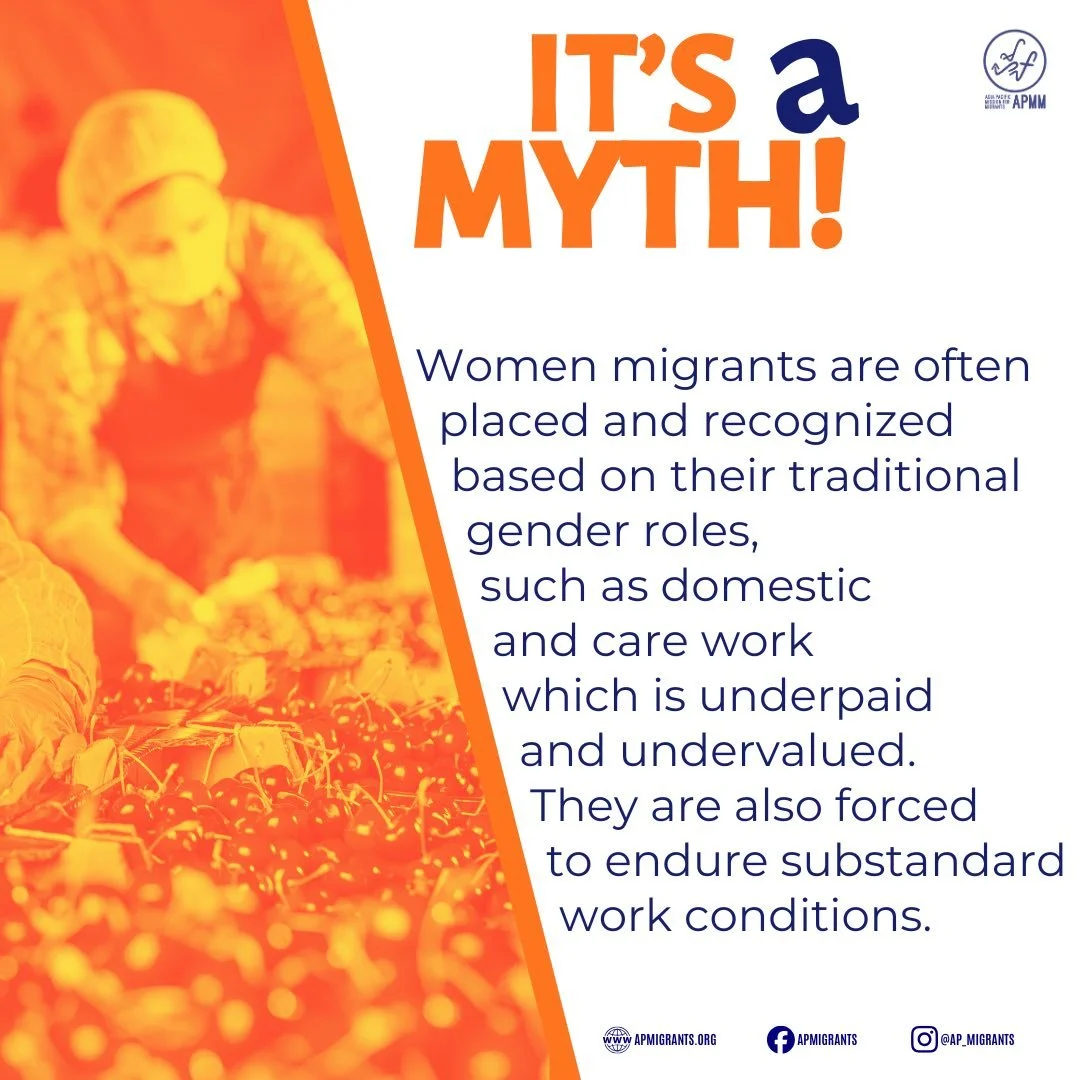
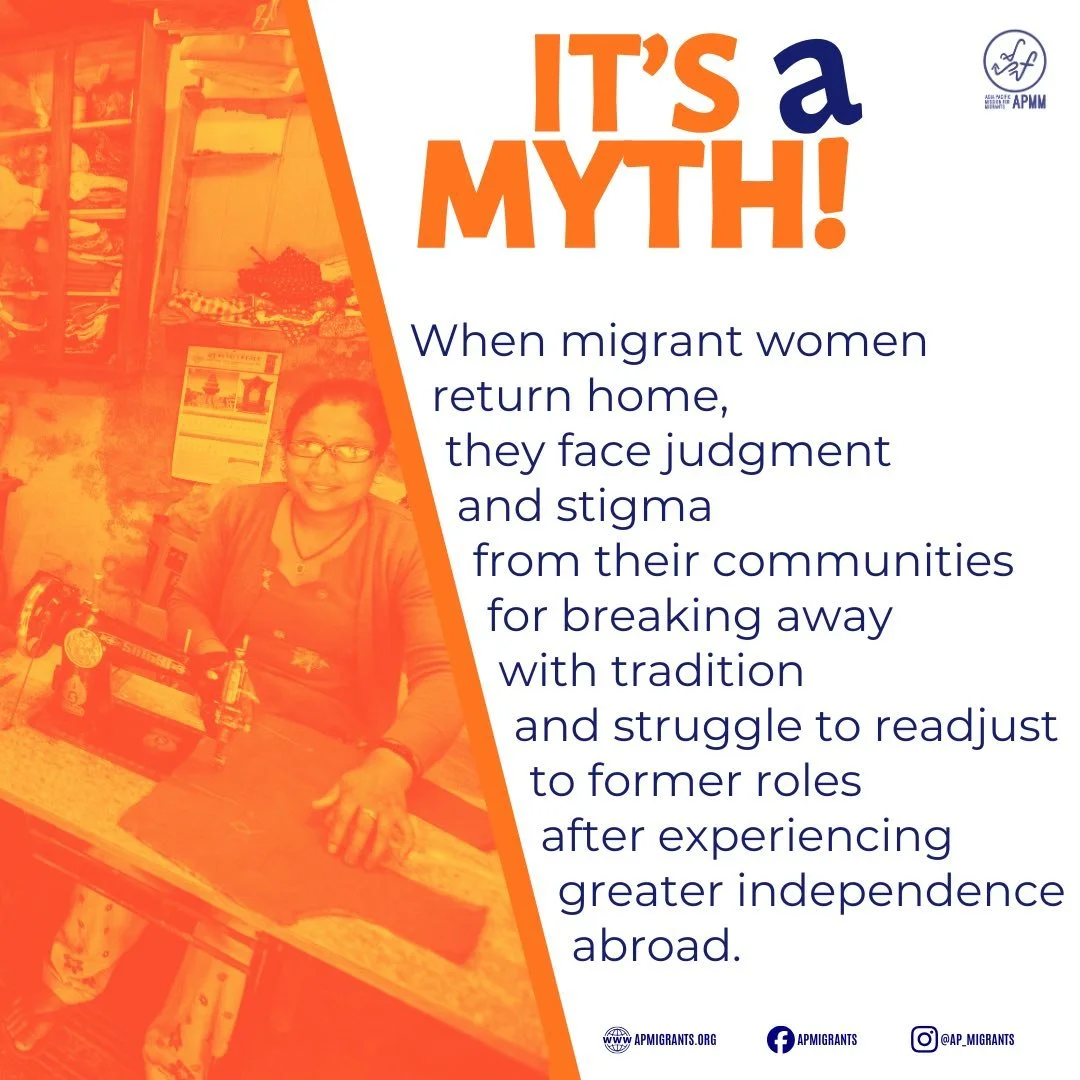
While governments rely on remittances to support national economies, migrants themselves carry the heaviest burdens through exploitation, high fees, and inadequate protection. Many women migrants are pushed into sectors that are low-paid and highly vulnerable, and they often face judgment or stigma when they return home. Overall, migration has become a systemic response to weak economies, while migrants pay the highest cost.
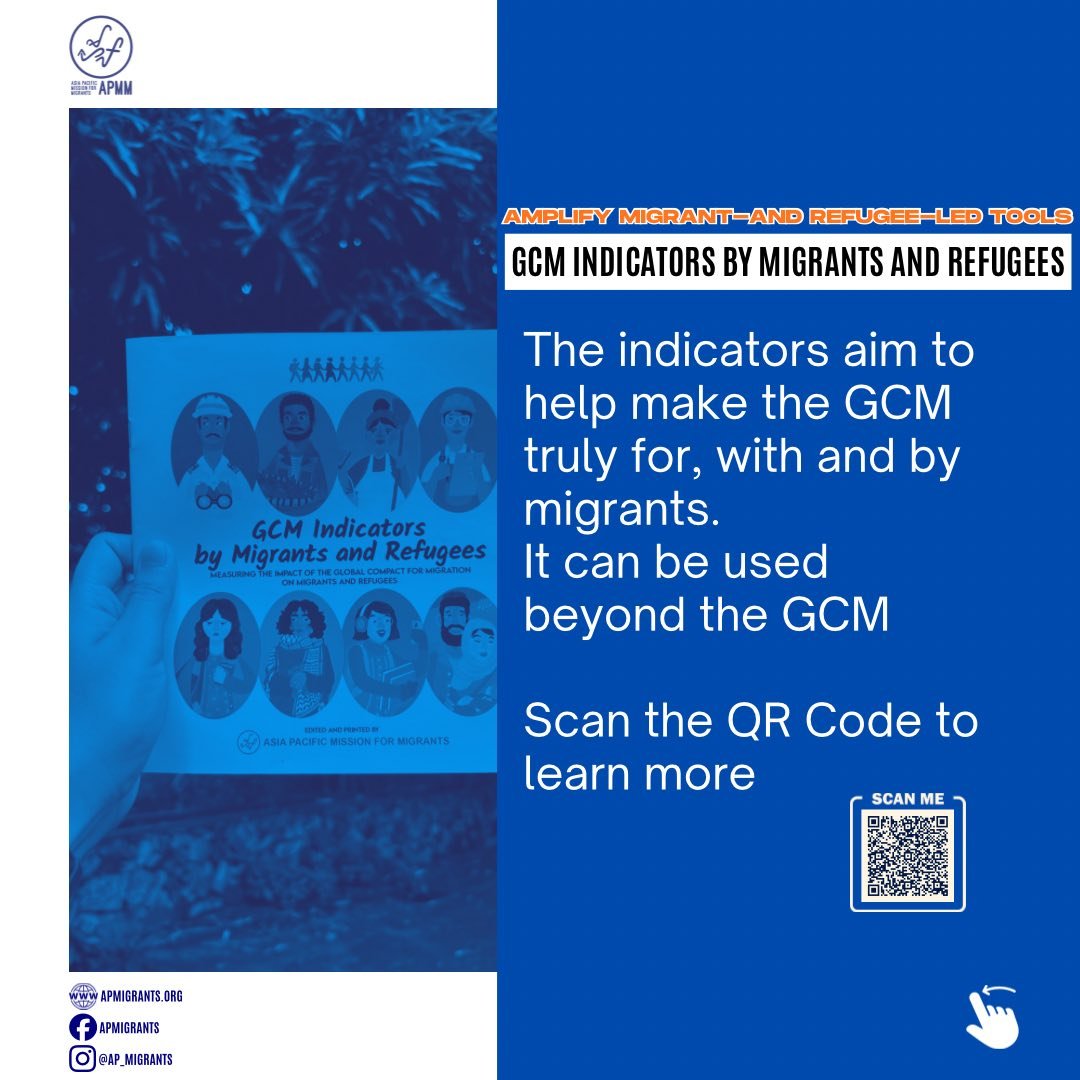
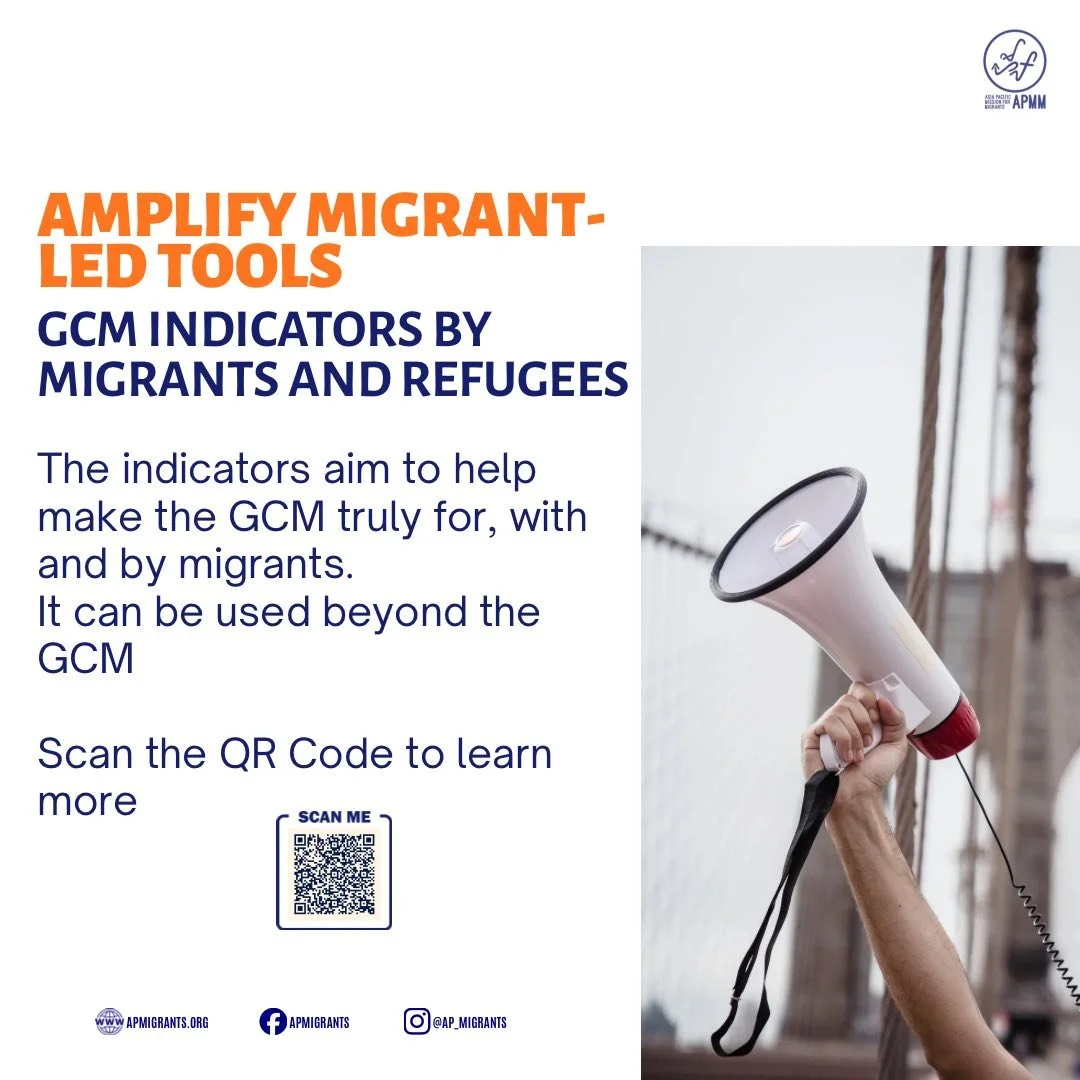
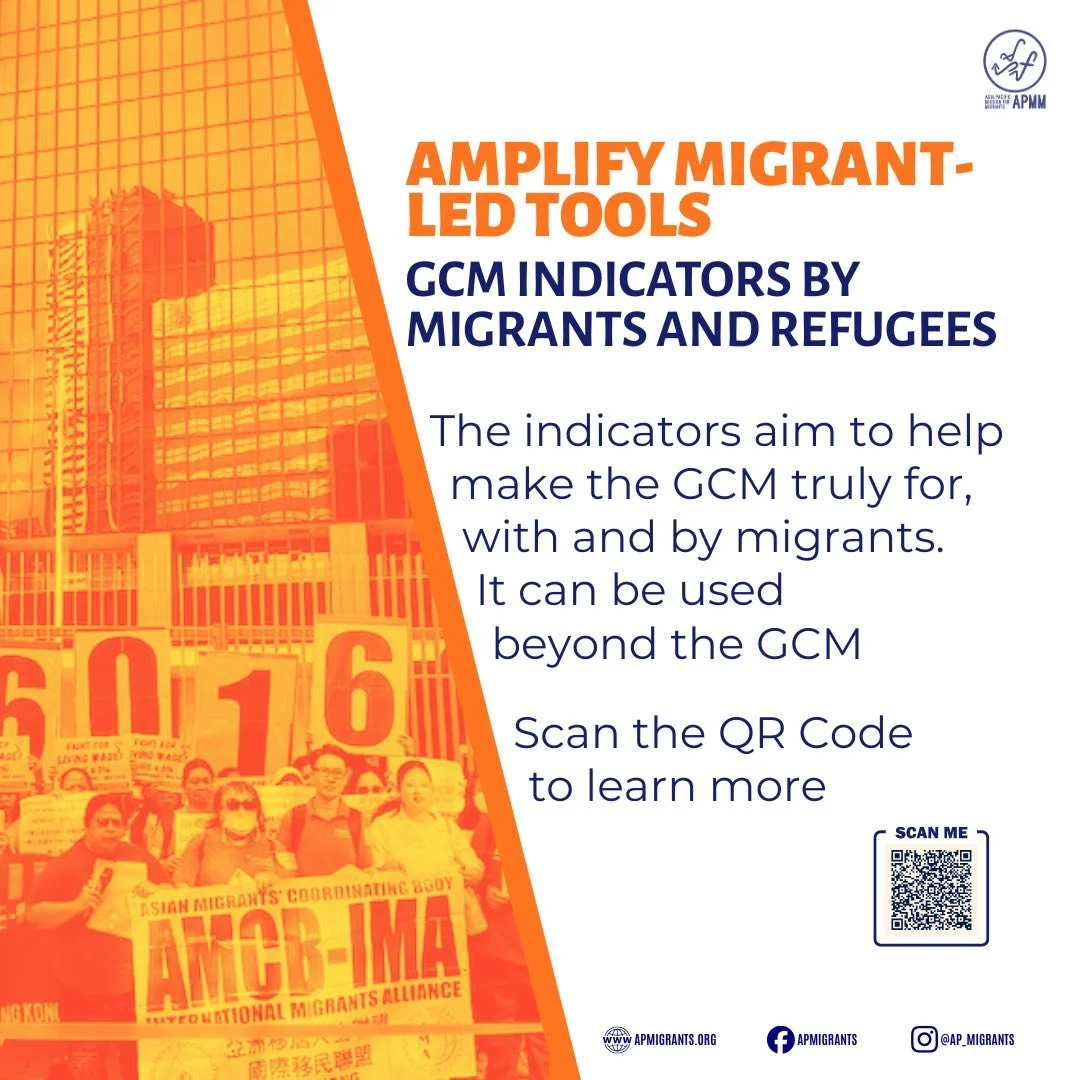
To address these problems, APMM, together with network and grassroots groups, developed the Global Compact for Migration (GCM) Indicators by Migrants and Refugees. These tools were created by migrants and refugees themselves through consultations and workshops, ensuring they reflect on-ground experiences.
The Indicators are grouped into seven clusters: access to justice; health, education, and social protection; women migrants’ rights and welfare; decent work; anti-trafficking; drivers of migration; and rights and participation. They have three main goals: to measure how governments uphold migrant and refugee rights, to guide concrete policy recommendations, and to ensure migrants play a meaningful role in shaping the GCM.
Read more about the GCM Indicators by Migrants and Refugees here
Check out our social media postings below!